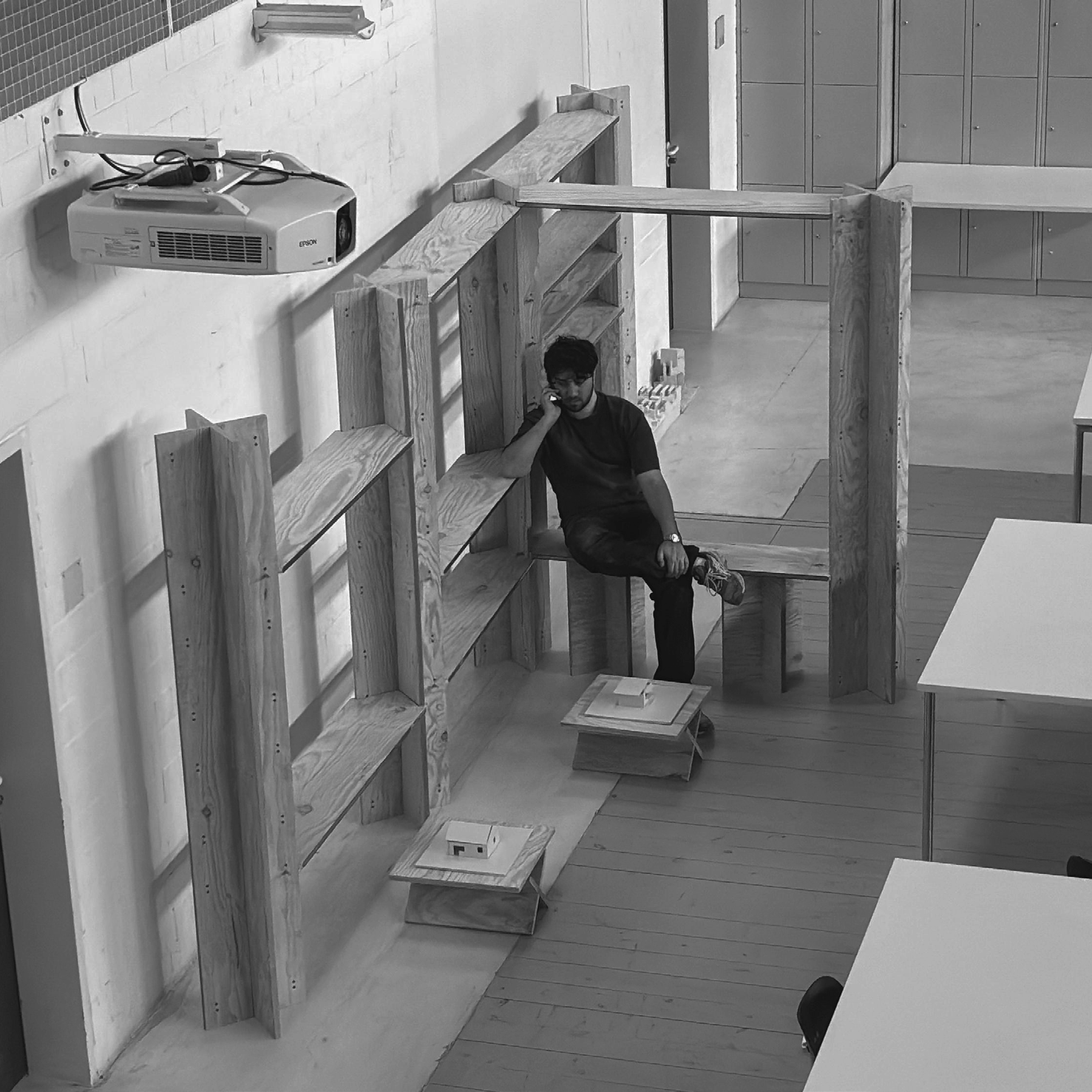
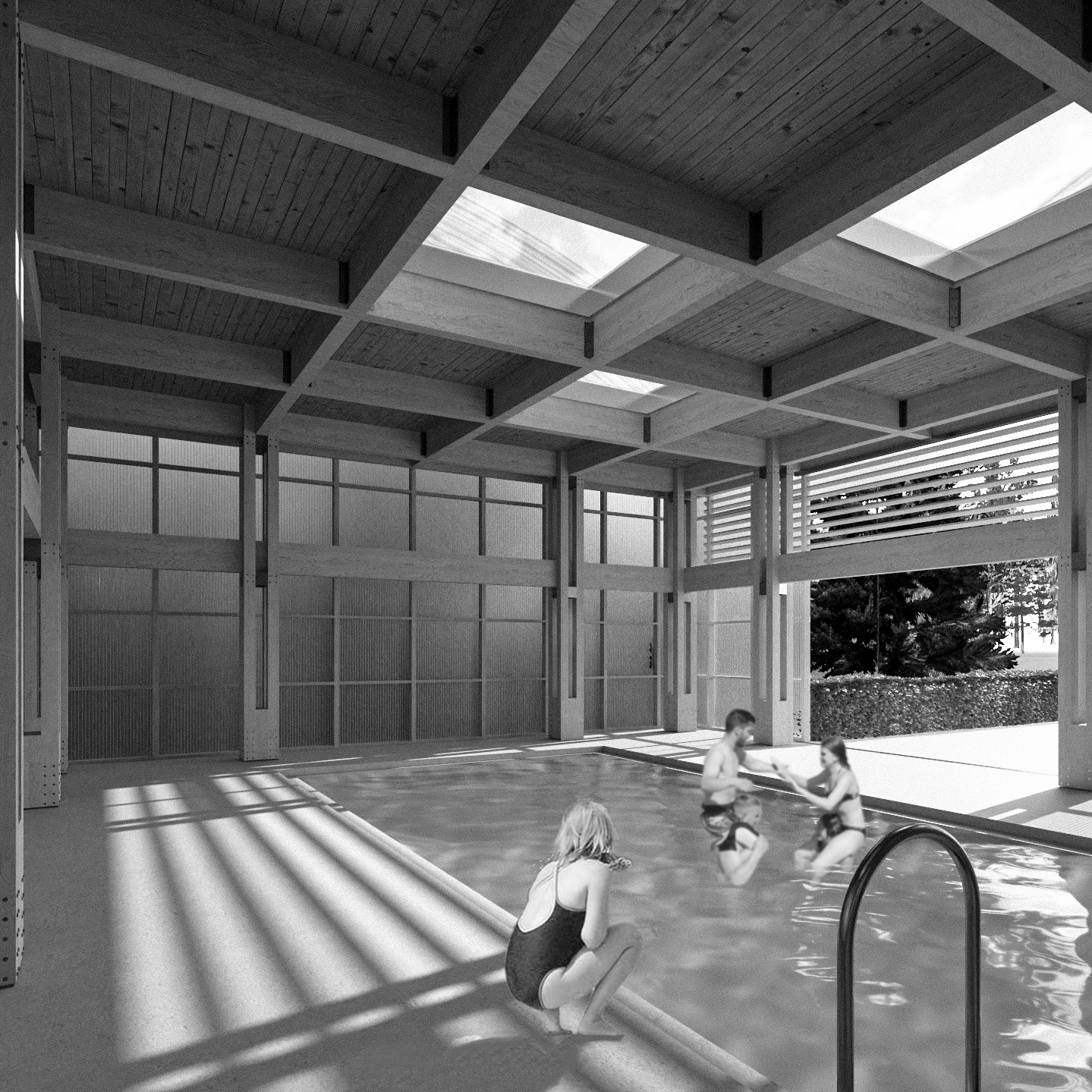
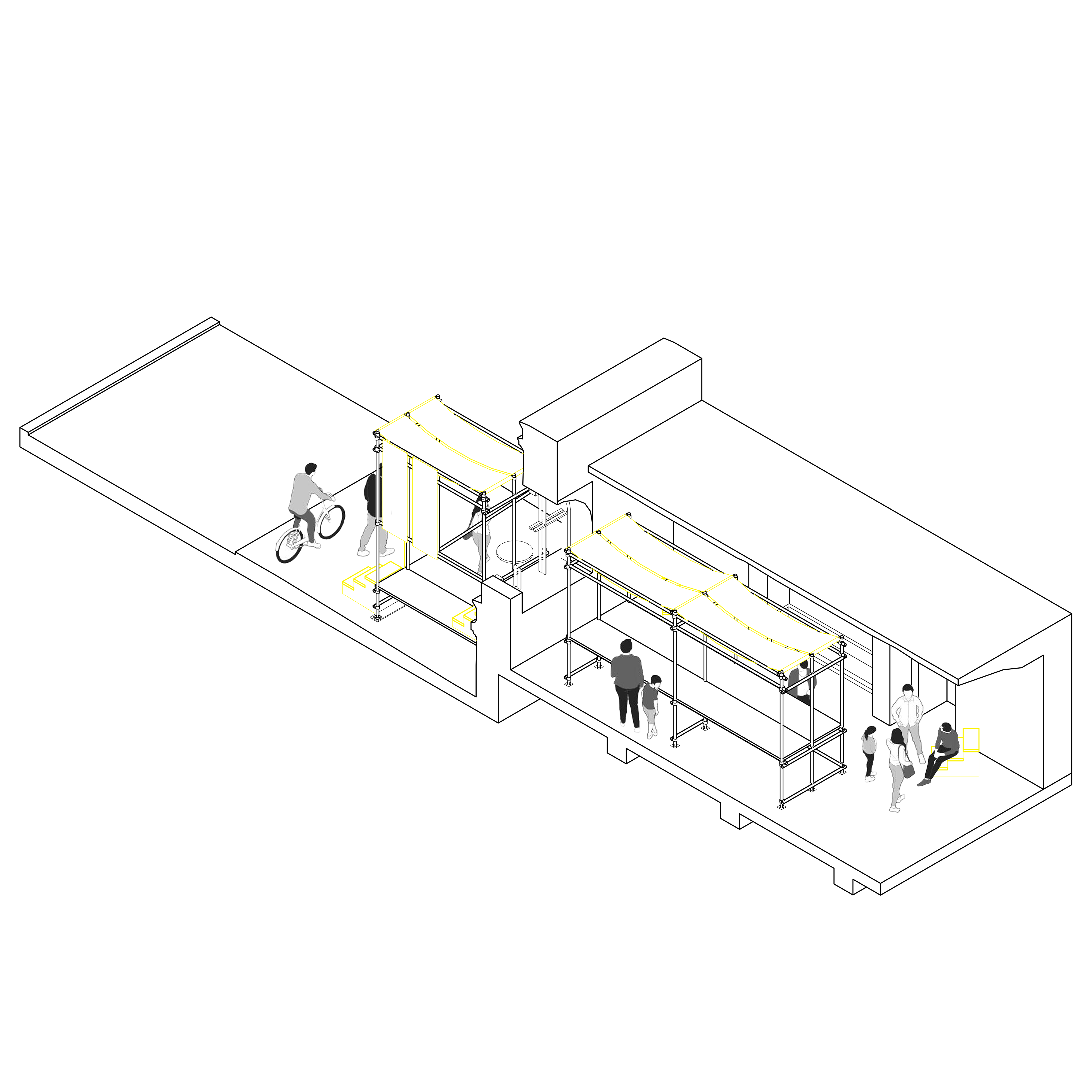
A temporary scaffold structure inserted into a historical context.
“Baustelle Zukunft” frames sustainability as an evolving process — reversible, open and constantly under construction.
“Baustelle Zukunft” frames sustainability as an evolving process — reversible, open and constantly under construction.

“Baustelle Zukunft” explores the construction site not as a temporary condition, but as an architectural attitude.
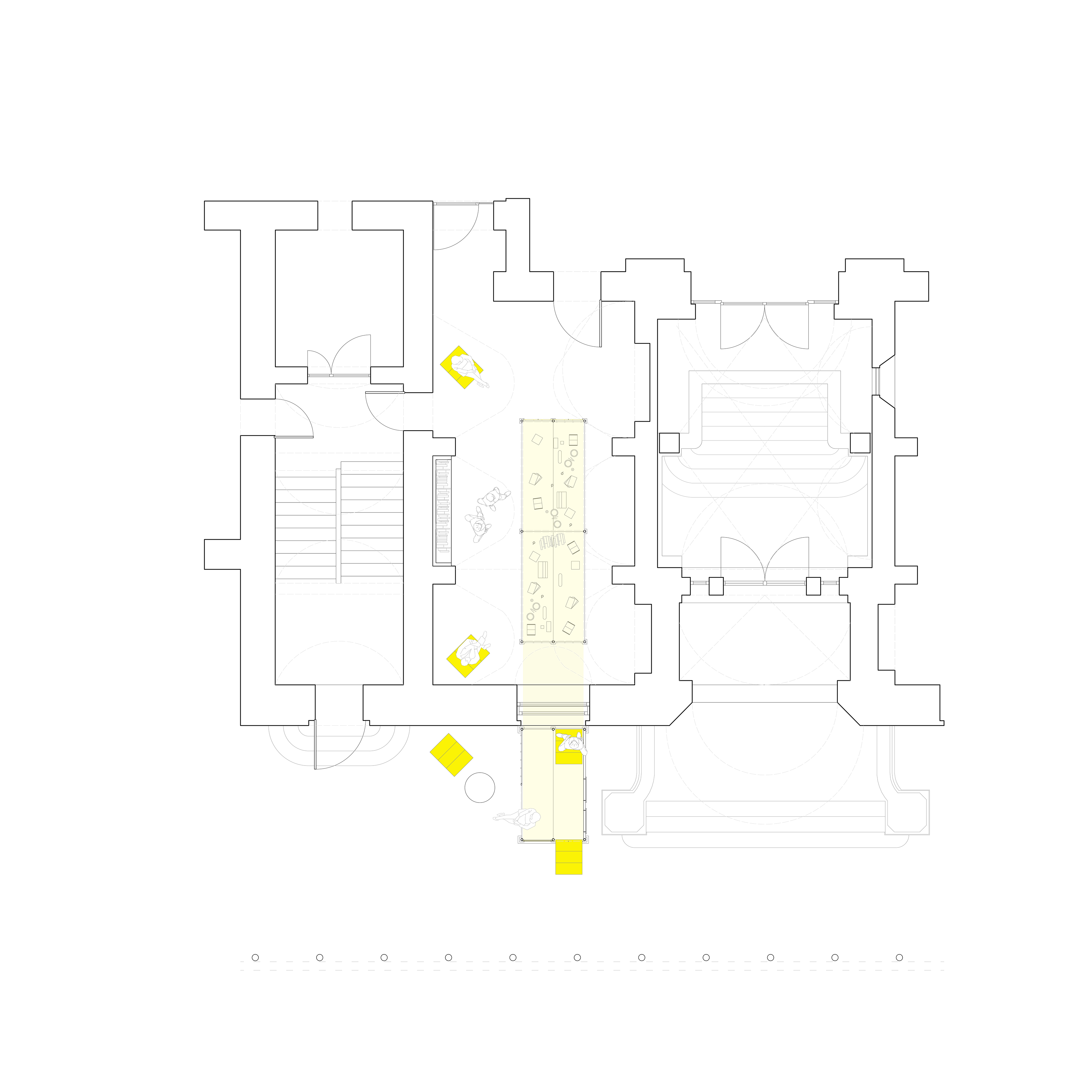
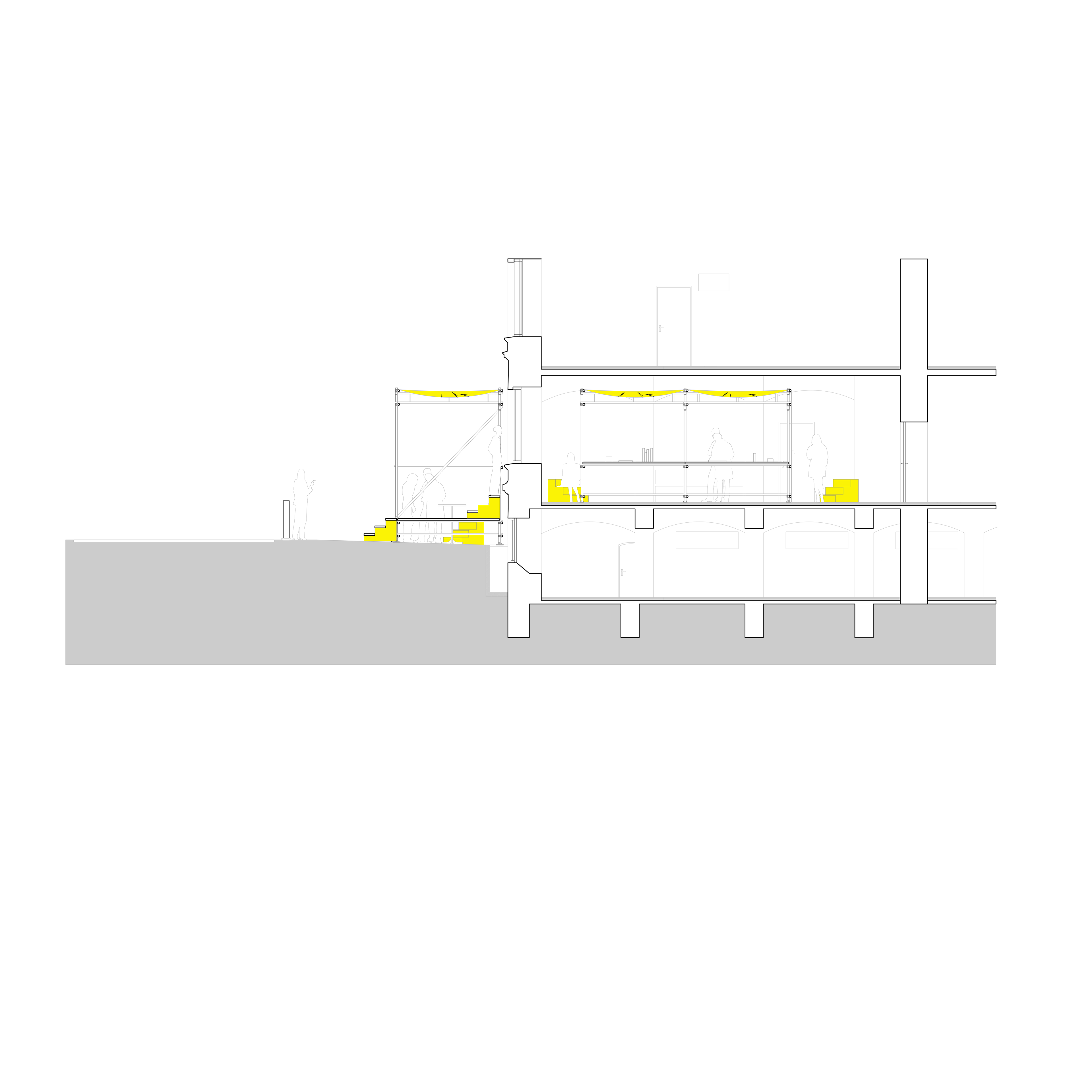
A modular scaffolding structure inhabits the historical interior of the former courthouse, creating a reversible spatial framework that remains open to change. Instead of closing space, the intervention invites movement, dialogue and participation. A translucent membrane connects inside and outside, turning the exhibition into a visible interface between city, material and process.
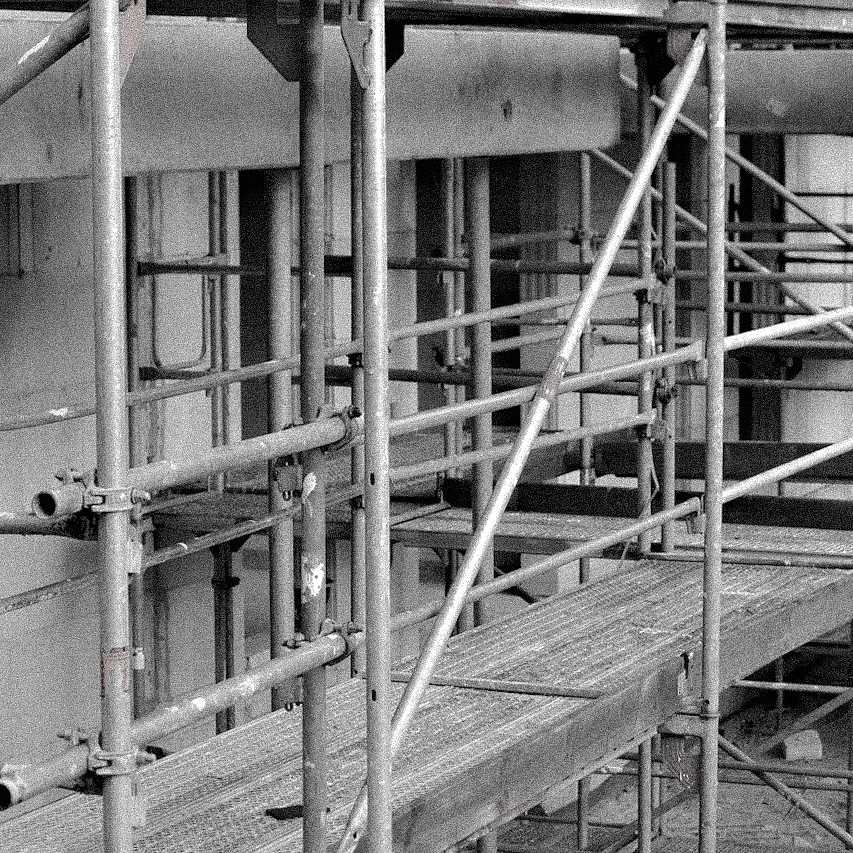
The project understands sustainability not as a finished state, but as an ongoing transformation. The scaffold becomes both infrastructure and exhibit — a carrier of ideas that can be assembled, dismantled and rebuilt elsewhere. Architecture appears here as a continuous act of “Weiterbauen”: a practice that embraces uncertainty, reuse and collective authorship.
Within the context of the World Design Capital, the installation acts as a laboratory of change — a space where building culture becomes process rather than product.
We do not build to finish.
We build to reveal transformation.
We build to reveal transformation.
The construction site becomes a metaphor for an open society —
a system in motion, shaped by reuse, dialogue and time.
Material carries memory, structure becomes narrative,
and architecture remains a process in becoming.
a system in motion, shaped by reuse, dialogue and time.
Material carries memory, structure becomes narrative,
and architecture remains a process in becoming.